
Community Health Education Degree Online

Community Health Education Program Overview
Earning a Bachelor of Science (BS) in Community Health Education online degree will help you make a positive difference in the communities that need you most.
The online bachelor's program aims to improve the health of people and their communities based on their needs and resources.
For student Jacqueline Graham, the program meant much more than what she learned in class. “The program really changed his life,” Graham says, giving him the confidence to not only complete the program but also earn a master’s degree.
This program meets the educational requirements for the Certified Health Education Specialist (CHES) examination offered by the National Commission on Health Education. Successful graduate students must meet the necessary educational requirements to sit for the CHES exam.
Professional look
With public health concerns in the United States and around the world, the need for health education and community health professionals is growing.
Health educators can work in a variety of settings. According to the BLS, these are the five largest employers of local health professionals and health educators: 1
- Government
- Hospitals – public, local and private
- Services for individuals and families.
- Religious organizations, donors, civilians, professionals, etc.
- Outpatient centers
The BLS notes that health educators typically need at least a bachelor's degree, but some organizations also require the Certified Health Education Specialist (CHES) credential. 2 CHES certificates are issued by the National Medical Education Commission (NCHEC).
SNHU's online bachelor's degree in public health program can help you prepare for a variety of positions in the rapidly growing field of public health education, including:
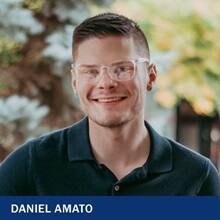
“I thought... imagine what I'm going to learn from this program and what I can accomplish with it,” Amato said.
The Bachelor of Science in Health Education is designed to help you build a solid foundation upon which you can begin the next chapter of your life. Whether you want to enter this field immediately or continue your education through the online Master of Public Health degree, this program can help you get there.
Make a difference in your community

“My cornerstone was my favorite and most valuable lesson. “I was able to focus on my passion of helping a poverty-stricken community and providing local youth an opportunity to reverse some of the negative behavior patterns.”
Courses and training programs.
When you earn an online nursing degree from SNHU, you'll complete a program designed to prepare you for success in healthcare, created by subject matter experts who understand the skills you need. The US Bureau of Labor Statistics lists some of these important characteristics1 as follows:
- Analytical and problem-solving skills. Health educators collect and evaluate data to determine the needs of the people they care for. They may have to deal with issues that arise during program planning, such as: B. Budget constraints or resistance from the community they serve.
- Pedagogical skills. Health educators and community health workers lead programs, teach classes, and facilitate discussions with clients and families.
- Interpersonal skills. Health educators and community health workers interact with people from different backgrounds. They must be good listeners and sensitive to the needs of the people they serve.
- Communication skills. Health educators and public health professionals must be able to clearly communicate information in health-related materials and in written program and funding proposals.
SNHU's Bachelor of Public Health Education prepares you to take the Certified Health Education Specialist (CHES) professional certification examination offered by the National Health Education Certification Commission (NCHEC). According to NCHEC, the CHES certificate shows employers that you have mastered the seven responsibilities for healthcare professionals outlined in the Health Education Professional Practice Analysis Project. 2 These areas:
- Management and leadership of education/health promotion.
- Assess health education/promotion needs, resources, and capacity.
- Communication, health promotion and promotion, education/health promotion and professions.
- Conduct assessments and research related to health education/health promotion.
- Implement health education/promotion.
- Education/Health Promotion Plan
- Act as a health education/promotion consultant.
The Community Health Education curriculum provides you with 12 credit hours of electives within your program, meaning you can choose four courses in Community Health Education, Integrated Health Professions, and Community Health Education.
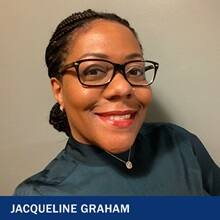
Student Jacqueline Graham said, “I have learned a lot over the years.” “This major is excellent and the coursework is interesting. There’s a lot to learn.”
In addition, there are usually many free electives in a public health degree program. It is ideal for students who have transfer modules or want to expand their skills and explore areas of interest.
Daniel Amato '21 was one of the students who received high scores for his program.
“I transferred credits to SNHU, which helped me complete my degree much faster,” he said. “Ultimately, all of my credits were electives, so I only had to complete my core courses to earn my degree in public health education. “It happened a lot quicker than I thought.”
Classes are led by teachers with experience in the field.
“The professors at SNHU are very compassionate and everyone wants their students to be successful,” Graham said. “It’s easily accessible, so you never feel alone or like you don’t have access to it because it’s available online.”
Amato agreed.
“My professors had expertise and passion for public health education,” she said. “It allowed us all to bring our own experiences into the classroom and use them in our studies. “It created a fun learning environment because we could read each other’s stories and share ideas.”
Cost of education
As a private, non-profit university, we are committed to making studying more accessible for everyone. That's why we offer some of the lowest prices for online education in the country.
We also offer financial aid packages for those who qualify, as well as a 30% tuition discount for full- and part-time U.S. military members and spouses of active military members.
| Online bachelor's degree programs | For every course | Per credit hour | Annual cost for 30 credit hours. |
|---|---|---|---|
| Titles/certificates | 990 dollars | 330 dollars | 9900 dollars |
| Degree/Certification (US Military, Full-time, Part-time and Active Duty Military Spouse)* | $693 | $231 | $6930 |
Tuition prices are subject to change and are reviewed annually. *Note: Students receiving this rate are not eligible for additional discounts.
Additional costs No fees for application and course materials (amount varies depending on the course)
Tidak ada komentar untuk "Community Health Education Degree Online"
Posting Komentar